Intrivity Edge Certification
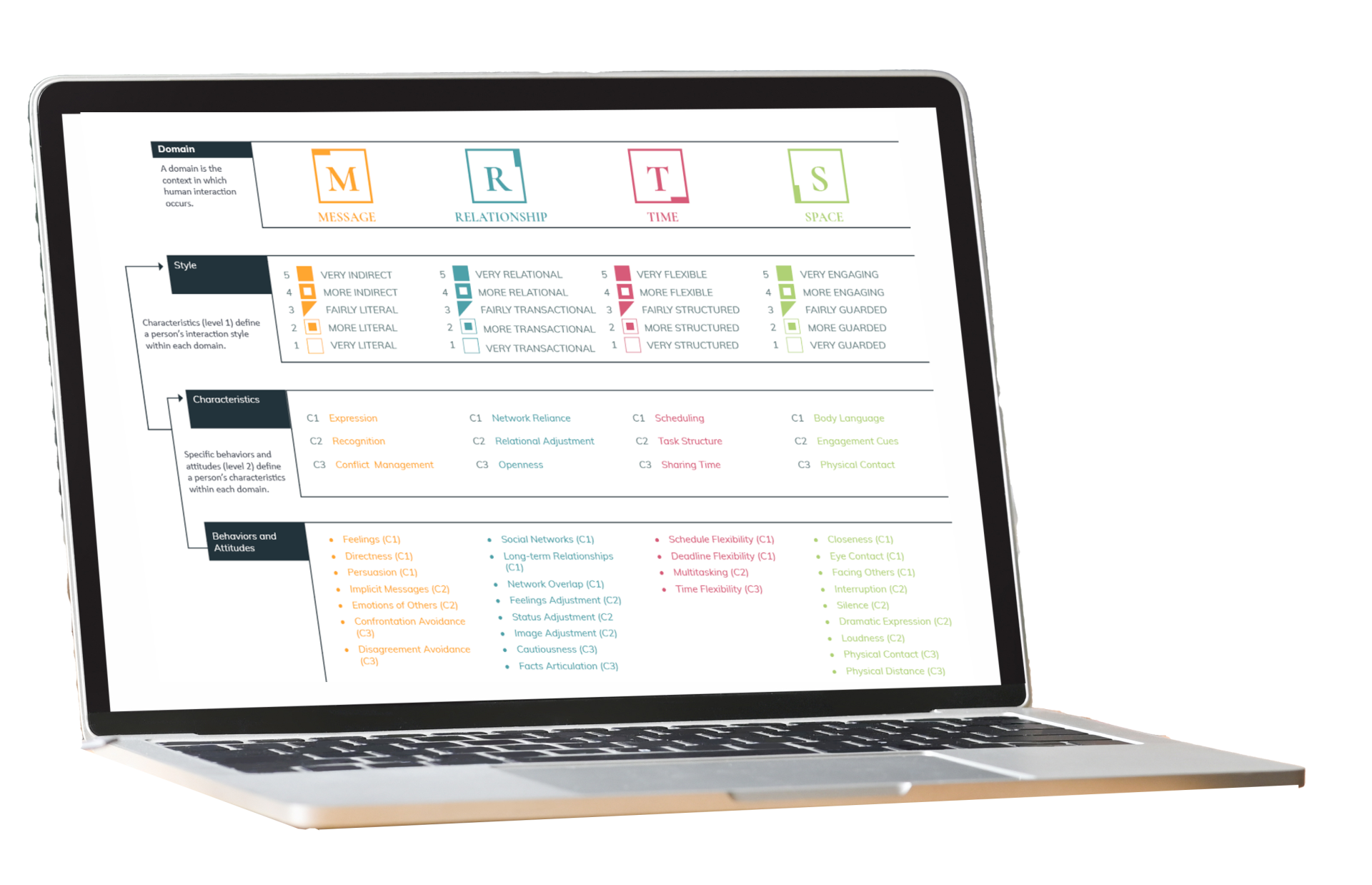
Intrivity Edge Certification is a two-week online training certification program. Earning your Certification authorizes you to use the Intrivity Assessment and to teach others how to interpret and use their MRTS Profile.
COMING SOON! Advanced trainer certification for facilitating productive team communication.
WHY GET CERTIFIED
Live, virtual classes led by Intrivity creators
Participate in two live, two-hour webinars, taught by Intrivity team members responsible for developing the Assessment. They are available to you for questions and discussion during the entire program.
Personal attention and robust group discussions
Class sizes are large enough to allow for group discussion but small enough to ensure personal attention.
Exclusive resources and priority access
Participants receive a resource tool kit that includes video clips and vignettes from classroom discussions. You will also have priority access to continuous training opportunities and new tools as they are developed for your use.
Edge Certfication Status
Intrvitity Edge Certification authorizes you to teach the Intrivity system and to work with different audiences.
Now Enrolling for Next Session! January 5-8 2022
Register for Next Session
I’ve used many assessments throughout my career and find Intrivity to be among the best I’ve seen. With Intrivity, you learn to activate and hone the power of how you communicate. It is truly unique and powerful to find a tool that has the research to back up such a useful instrument.
-Yvonne Gaines
Senior Organizational Development
Strategist, 1199 SEIU Funds
A trusted tool for starting DEI discussions
John Healy is a workforce strategy and solutions expert who has spent his career connecting people with work and connecting enterprises to the talent needed to execute their business strategy. For the past 20 years, John has been engaged by executives across the globe to help define, build, and execute their business strategy by redefining the ways that they engage talent.
Through this work, John has recognized that as organizations embrace a more deliberate focus on diversity, equity, and inclusion, the ability to engage their workforce requires new skills. That’s because in any professional setting involving teams, combining individual differences in communication style with the pressure of deadlines and performance expectations is a recipe for miscommunication – and ultimately, underperforming teams. Often, miscommunication
occurs not from what is actually said, but as the result of the use and interpretation of non-verbal cues. And while there are many tools and assessments
designed to address communication available, they are only focused on verbal communication and don’t address the non-verbal aspects of communication.
Intrivity solves this problem.
An excellent tool for individuals to gain a deep understanding of their own communication style, it focuses on the use and interpretation of non-verbal cues. It develops self-awareness and gives people tools to identify and interpret other communication styles they encounter every day. What’s more, Intrivity offers a gentle way to begin DEI discussions by creating self-awareness about one’s communication style and how it may differ from others, rather than by launching straight into very difficult discussions of race, gender, or unconscious biases without having the tools to communicate effectively.
Intrivity offers a gentle way to begin DEI discussions by creating self-awareness about one’s communication style and how it may differ from others.
A trusted tool for starting DEI discussions
SDS is a workforce strategy and solutions expert who has spent his career connecting people with work and connecting enterprises to the talent needed to execute their business strategy. For the past 20 years, John has been engaged by executives across the globe to help define, build, and execute their business strategy by redefining the ways that they engage talent.
Through this work, John has recognized that as organizations embrace a more deliberate focus on diversity, equity, and inclusion, the ability to engage their workforce requires new skills. That’s because in any professional setting involving teams, combining individual differences in communication style with the pressure of deadlines and performance expectations is a recipe for miscommunication – and ultimately, underperforming teams. Often, miscommunication
occurs not from what is actually said, but as the result of the use and interpretation of non-verbal cues. And while there are many tools and assessments
designed to address communication available, they are only focused on verbal communication and don’t address the non-verbal aspects of communication.
Intrivity solves this problem.
An excellent tool for individuals to gain a deep understanding of their own communication style, it focuses on the use and interpretation of non-verbal cues. It develops self-awareness and gives people tools to identify and interpret other communication styles they encounter every day. What’s more, Intrivity offers a gentle way to begin DEI discussions by creating self-awareness about one’s communication style and how it may differ from others, rather than by launching straight into very difficult discussions of race, gender, or unconscious biases without having the tools to communicate effectively.
Intrivity offers a gentle way to begin DEI discussions by creating self-awareness about one’s communication style and how it may differ from others.